


Complete Scuba Gear Guide: What to Buy vs. Rent for First-Time Divers
- CRLSPINEDA
- 4 days ago
- 4 min read

Almost every scuba gear guide online gives the same generic advice: "buy your mask, rent your BCD." True, but it doesn't tell you why, doesn't put real numbers next to the decision, and almost never accounts for the fact that diving in warm Miami waters is a completely different equation than diving in a cold quarry or a five-star resort in the Maldives.
This guide fixes that. It breaks down exactly what to buy first, what to keep renting, how the math actually works out over your first year of diving, and what makes sense specifically for divers training and diving in South Florida.
What the Buy-vs-Rent Decision Really Depends On
Before looking at individual gear pieces, it helps to answer four quick questions honestly:
How often will you actually dive? A few dives a year vs. every weekend changes everything.
Are you diving locally or traveling to dive? Flying with a full gear bag adds baggage fees and hassle.
Does fit and hygiene matter to you? Some gear touches your skin and face directly; other gear doesn't.
What's your budget right now? You don't have to buy everything on day one — and you shouldn't.
Keep these in mind as you go through the list below, because the "right" answer genuinely changes based on your situation.
What to Buy First (Even Before You're Fully Certified)

1. Mask and Snorkel
This is the one piece of gear every instructor agrees on: buy it early, ideally before your open water dives. Masks aren't one-size-fits-all — face shape determines seal quality, and a leaking mask is one of the most common reasons new divers feel anxious underwater. A well-fitted mask, tried on in-store, typically costs $40–$80 and will last for years.
2. Fins
Fins are the second easy buy. Foot shape and calf fit vary enormously, and rental fins are often stretched out from heavy use, which affects your kick efficiency. A solid beginner pair runs $60–$120.
3. Dive Computer
Once you're certified and plan to keep diving, a dive computer becomes worth owning. It tracks your personal dive history, no-decompression limits, and ascent rate — and getting familiar with your own display, rather than a different rental unit every time, genuinely improves safety awareness. Entry-level computers start around $200–$300.
4. A Lightweight Wetsuit (Miami-Specific Tip)
This is where most generic gear guides fall short — they assume cold-water diving and recommend renting wetsuits entirely. In Miami's warm year-round water (typically 78–85°F), a thin 3mm wetsuit or dive skin is affordable, packs small, and solves the hygiene concerns that come with rental neoprene. Expect to pay $80–$150 for a quality 3mm suit — far less than the thick suits divers need in colder regions.
What Makes Sense to Rent (At Least Starting Out)
1. BCD (Buoyancy Control Device)
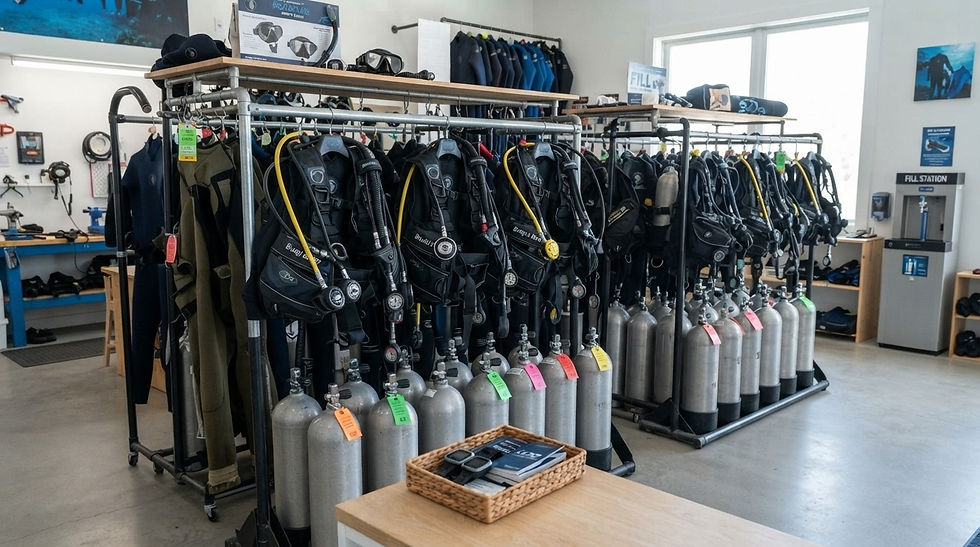
BCDs are bulky, come in a wide range of sizes, and a well-maintained rental unit performs almost identically to an owned one for recreational depths. Unless you're diving more than 20–25 times a year, renting makes financial and logistical sense.
2. Regulator
Regulators require annual professional servicing whether you dive or not, and that maintenance cost can outweigh what you'd spend renting one for occasional trips. Save this purchase for once you're diving consistently — most instructors suggest waiting until you've logged 25+ dives.
3. Tanks and Weights
There's essentially no reason for a recreational diver to own tanks or weights. They're heavy, need regular inspection and hydro testing, and every dive shop supplies them as part of your trip cost anyway.
Miami Rental Price Reference
To give you a real sense of what renting costs locally, here's what South Florida dive operators typically charge per item, per dive day:
Item | Typical Rental Cost |
Tank | $10 |
Nitrox tank | $17 |
BCD | $25 |
Regulator | $25 |
Mask, snorkel & fins set | $25 |
Wetsuit | $15 |
A full rental kit (tank, BCD, regulator, mask/fins/snorkel, wetsuit) typically adds up to around $85–$100 per dive day if you don't own anything yet.
The Real Math: When Buying Pays Off
Here's the breakeven logic most guides skip entirely. If a full rental kit costs roughly $85–$100 per dive day, and a personal starter kit (mask, snorkel, fins, and a lightweight wetsuit) costs around $250–$350 total, you recover that cost within your first 3–4 dive days — and every dive after that is meaningfully cheaper, not to mention more comfortable.
Higher-cost items like a BCD or regulator have a longer breakeven window (often 25–30 dives), which is exactly why most experienced divers recommend holding off on those purchases until you know diving is a long-term hobby, not a one-time experience.
A Smart First-Year Gear Checklist
Instead of buying everything at once, build your kit in this order:
Before certification: Mask, snorkel, fins (buy)
Right after certification: Dive computer, lightweight wetsuit (buy)
First 10–20 dives: Continue renting BCD, regulator, tanks, and weights
After 25+ dives, if diving regularly: Consider buying your own BCD and regulator
This approach spreads out the cost, lets you confirm you enjoy diving before committing financially, and still gives you the comfort and hygiene benefits of owning the gear that matters most.
Get Properly Fitted at Ace Diving
Buying the right mask or fins isn't just about picking a color — fit determines comfort and safety underwater. At Ace Diving in Miami, our team helps first-time divers get properly fitted for personal gear and offers full equipment rental for everything else, so you're never over-investing before you know what you need.
Visit our shop or get in touch with Ace Diving to build a gear plan that actually fits your diving goals and budget.


Comments